
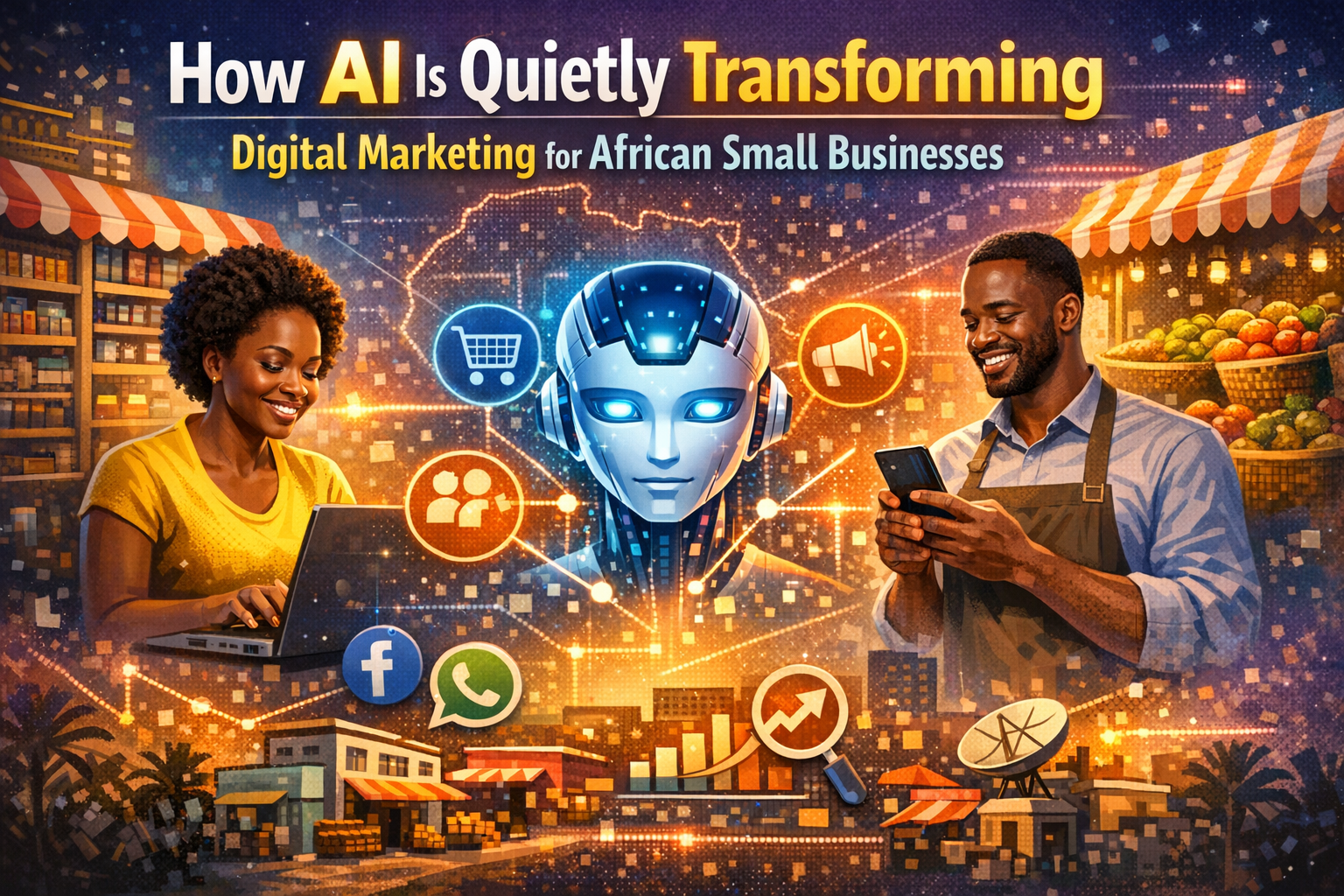
Across Africa's bustling entrepreneurial landscape, a quiet revolution is unfolding in the digital marketing space. Small business owners?from Nairobi to Lagos, Cape Town to Accra?are discovering that artificial intelligence tools once reserved for Silicon Valley enterprises are now accessible, affordable, and transformative for their operations. This shift is fundamentally changing how African SMEs compete globally, reach customers, and scale their operations with limited budgets.
The Accessibility Revolution
Five years ago, sophisticated marketing automation and customer analytics would have been financially out of reach for most African small businesses. Today, AI-powered platforms are democratizing these capabilities. Cloud-based tools, flexible pricing models, and mobile-first solutions have made it possible for a startup in Kampala to leverage the same intelligence that multinational corporations use.
The shift began with the proliferation of affordable SaaS solutions specifically designed for emerging markets. Platforms that understand local payment methods, operate on spotty internet connections, and deliver insights in multiple languages have opened doors previously closed to small operators. More importantly, these tools work with the connectivity realities of African markets?not against them.
AI is not replacing African marketers; it's amplifying their capabilities and allowing them to compete at a scale that would otherwise be impossible.
From Data Gaps to Data-Driven Decisions
One of the most significant transformations AI is enabling involves customer intelligence. Traditionally, African small businesses operated with incomplete information about their customers. They knew who purchased, but understanding why customers chose them, when they were most likely to buy, and what messaging would resonate?these insights were expensive luxuries.
AI-powered analytics platforms now automatically process transaction data, social media interactions, and customer behavior patterns. This gives small business owners visibility that was previously the domain of well-funded marketing departments. A fashion retailer in Ghana can now identify which products resonate most with different customer segments. A logistics startup in Nigeria can predict demand patterns. A digital agency in Kenya can optimize campaign spending in real-time.
The practical impact is measurable: reduced marketing waste, higher conversion rates, and more efficient customer acquisition. For businesses operating with tight margins, this efficiency translates directly to survival and growth.
Content Creation and Personalization at Scale
Creating compelling marketing content has always been resource-intensive. Small African businesses typically lack dedicated copywriters, designers, or social media teams. Generative AI is changing this equation substantially.
Tools powered by large language models can now help businesses:
- Generate email campaigns tailored to different customer segments
- Create social media content calendars automatically
- Produce product descriptions optimized for search visibility
- Translate marketing materials across languages with cultural nuance
- A/B test messaging variations to identify top performers
A small ecommerce business in Dar es Salaam, for instance, can now use AI to personalize website experiences for each visitor. A customer browsing electronics might see different product recommendations, headlines, and calls-to-action than one shopping for apparel. This level of personalization, driven by AI, significantly improves conversion rates without requiring a large marketing team.
What's particularly relevant for African markets is that these tools are beginning to understand local languages, dialects, and cultural contexts. An AI tool that can generate compelling Swahili marketing copy or understand Nigerian Pidgin nuance is infinitely more valuable than one confined to English.
Customer Service and Relationship Building
AI-powered chatbots and customer service systems are becoming increasingly sophisticated, yet many African businesses haven't yet fully adopted them. Those that have are discovering dramatic improvements in customer satisfaction and retention.
These systems can:
- Handle routine customer inquiries 24/7 without human intervention
- Escalate complex issues to human agents intelligently
- Learn customer preferences and provide personalized recommendations
- Operate across multiple channels?WhatsApp, Facebook, email, SMS
- Provide support in multiple African languages
For African businesses where customer service budgets are minimal, AI-powered automation is not a luxury?it's enabling factor for growth. A small business can now provide the level of customer responsiveness that customers expect, without scaling headcount proportionally.
The Competitive Advantage
The real significance of AI's quiet transformation in African digital marketing is this: it's compressing the advantage that large, well-funded competitors previously held. A small business in Kampala with smart AI tools can now out-market and out-execute competitors with 10 times the budget, simply by being more strategic about where they invest and more intelligent about how they communicate.
This is democratization in its truest sense. It's not about giving everyone equal resources?it's about giving everyone access to the same intellectual firepower.
The African SME that embraces AI-driven digital marketing in 2024 is positioning itself not just for local success, but for regional and potentially global competitiveness. Those who delay risk watching their more forward-thinking competitors capture market share, customer loyalty, and sustainable growth. The transformation is quiet because it's happening business by business, campaign by campaign. But its cumulative impact on African entrepreneurship will be nothing short of profound.
```

💬 0 Comments
+ Leave a comment