
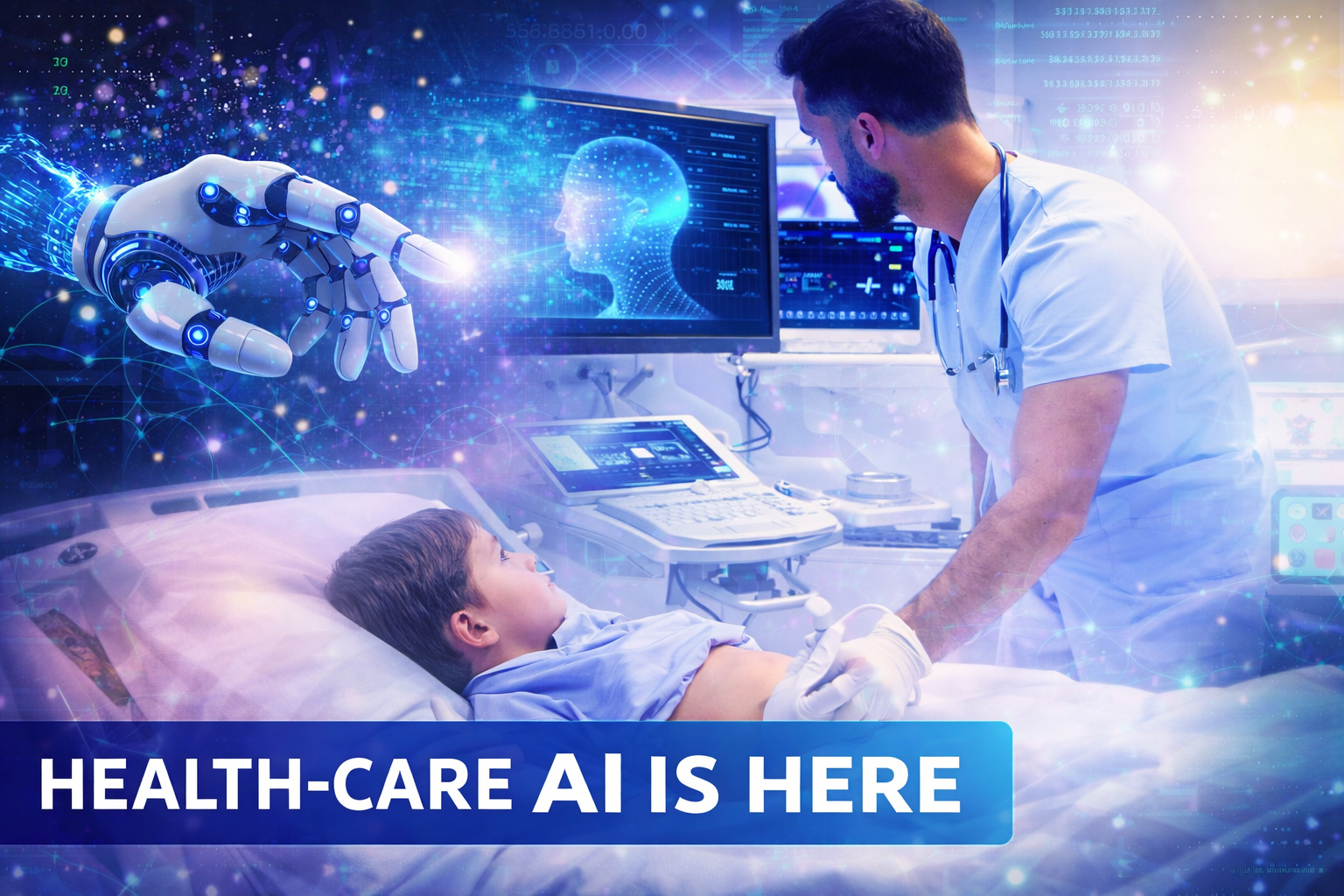
The promises were seductive. Artificial intelligence could read medical imaging faster than radiologists. Machine learning algorithms could predict which patients would develop heart disease. AI chatbots could handle the tedious work of patient intake, freeing up clinical staff to focus on care. For the past five years, healthcare systems around the world have invested billions of dollars in these technologies, convinced that AI was about to transform medicine. But here we are in 2026, and we're facing an uncomfortable truth: we still don't know if any of this actually helps patients get better.
This isn't a critique of AI itself. The technology works. Algorithms can identify tumors in CT scans. They can flag irregular heartbeats in ECG data. They can predict patient deterioration with reasonable accuracy. The problem is far more subtle and far more consequential. We've optimized for the wrong metrics. We've measured whether AI can perform a task?and it can. What we haven't measured, with any consistency, is whether using AI for that task improves patient outcomes, reduces mortality, lowers costs, or enhances quality of life. We've built a house on sand, and nobody seems particularly concerned about it.
The Measurement Crisis Nobody Wants to Discuss
Walk into almost any major hospital system in North America, Europe, or increasingly in Africa, and you'll find AI tools deployed across departments. Diagnostic imaging AI. Predictive analytics platforms. Administrative workflow automation. Yet if you ask hospital leadership for rigorous, randomized controlled trial data showing that these tools improve patient outcomes, you'll likely get evasive answers. The data often doesn't exist.
This is the core problem. Hospitals have been implementing AI based on what we might call "task-level validation"?proof that the algorithm performs well on a test dataset. A radiology AI might achieve 95% accuracy at detecting lung nodules. That's impressive. But does implementing that AI in a real hospital, with real radiologists, real workflows, and real patients, actually lead to better lung cancer survival rates? Nobody has systematically studied it.
Compare this to pharmaceutical development, where the FDA requires years of clinical trials, safety monitoring, and rigorous statistical analysis before a new drug reaches patients. AI deployments in healthcare? Often they slip into routine use based on a published paper and vendor marketing materials. The regulatory framework simply hasn't kept pace with the technology. As we've seen with agentic AI systems and their increasing autonomy, the gap between capability and oversight becomes more dangerous as these systems take on more responsibility.
We've optimized for the wrong metrics. We've measured whether AI can perform a task?and it can. What we haven't measured is whether using AI improves patient outcomes.
The problem compounds when you consider implementation variability. A diagnostic AI might work brilliantly in the controlled environment where it was trained, but perform differently when deployed across different hospital systems, different imaging equipment, different patient populations. In low-resource settings?particularly across Africa, where healthcare infrastructure is already stretched?the risk of AI tools underperforming or causing unintended consequences is substantial. Yet we're seeing rapid adoption without corresponding outcome tracking.
The AI Hype Machine Meets Reality
Part of the reason we're in this situation is structural. AI companies have incentives to deploy quickly and move on to the next product. Healthcare providers have incentives to signal that they're on the technological frontier. And the media?ourselves included?have incentives to cover technological breakthroughs, not the quiet, unglamorous work of validating whether those breakthroughs actually matter.
Consider the current landscape of AI tools available to healthcare providers. Many of these platforms promise to optimize everything from scheduling to diagnosis. Yet if you examine the broader ecosystem of AI automation tools, you'll notice that most enterprise AI adoption is measured in terms of efficiency gains, cost reduction, or staff time saved?not patient health outcomes. We're optimizing for what's easy to measure, not what's important.
The hype became particularly intense around diagnostic AI. Researchers published studies showing that algorithms could match or exceed radiologist performance on specific tasks. These papers were widely cited, venture capital flowed, and suddenly every healthcare system wanted an AI radiologist. But those studies typically compared algorithm performance to radiologist performance in isolation. They didn't measure what happens in actual clinical practice, where radiologists work with multiple information sources, have continuity of care, and can integrate clinical context. An algorithm that performs well in a research setting might be actively harmful when it replaces human judgment in a complex clinical environment.
This mirrors broader challenges we've seen in AI deployment across other sectors. Just as the actual impact of AI on employment remains murky despite confident predictions, the actual impact on healthcare outcomes remains largely unmeasured.
What We Actually Know Works
To be fair, there are examples of AI in healthcare that have demonstrated genuine impact. Clinical decision support systems that flag potential drug interactions before they reach patients have likely prevented deaths. AI-powered pathology platforms that help process enormous volumes of slides in cancer diagnostics have improved turnaround times. Some predictive models for patient deterioration in ICU settings have shown measurable improvements in outcomes when properly integrated into clinical workflows.
The pattern here is clear: AI tools that augment human expertise, that integrate into existing workflows, and that are measured against actual patient outcomes tend to be valuable. AI tools that attempt to replace human judgment, that ignore implementation complexity, and that are measured only on algorithmic performance tend to be disappointing or harmful.
In the African healthcare context, this distinction becomes even more critical. Africa faces a genuine crisis of healthcare capacity. There are far fewer doctors, radiologists, and pathologists per capita than in developed nations. The temptation to deploy AI as a shortcut?to use algorithms to replace expertise that isn't available?is enormous. But the risk is equally enormous. Implementing an AI diagnostic tool that's 90% accurate might sound impressive until you realize that 10% error rate, applied across millions of patients with limited follow-up care, creates a public health catastrophe. This is precisely why the real transformation of healthcare in Africa needs to be thoughtful and outcome-focused, not just technologically focused.
The Regulatory Blind Spot
One reason we're in this situation is regulatory. The FDA has attempted to create frameworks for AI regulation, but they're primarily focused on safety and performance at the algorithmic level. They don't typically require long-term outcome studies showing that deployed AI actually improves healthcare quality. Insurance companies, meanwhile, have little incentive to fund outcome studies?if an AI tool reduces their costs, whether or not it improves patient health is a secondary concern.
Hospital systems themselves face perverse incentives. If deploying an AI tool reduces their operational costs, they benefit immediately. If it harms patient outcomes through missed diagnoses or inappropriate treatment recommendations, those harms might not be apparent for months or years, by which point the tool is deeply embedded in their systems and reversing course is politically difficult.
We've seen similar patterns in other technology adoption scenarios. The gap between what AI tools promise and what they actually deliver has become increasingly obvious across different domains. In healthcare, the stakes are simply higher. A content creator using an inferior AI tool loses time. A patient receiving care guided by an inadequately validated AI system might lose their life.
Moving Forward: What Needs to Happen
The path forward requires three things. First, we need regulatory frameworks that require outcome-based validation, not just algorithmic performance. If an AI tool is going to influence patient care, it should be subject to the same evidentiary standards as a medical device or pharmaceutical intervention. This doesn't mean slowing innovation?it means being honest about what we know and don't know.
Second, we need healthcare systems to actually measure outcomes. This is expensive and unglamorous, but essential. We need randomized controlled trials comparing care with and without specific AI tools. We need to track long-term patient health outcomes, not just operational metrics. For healthcare systems deploying AI, this should be non-negotiable.


💬 0 Comments
+ Leave a comment